

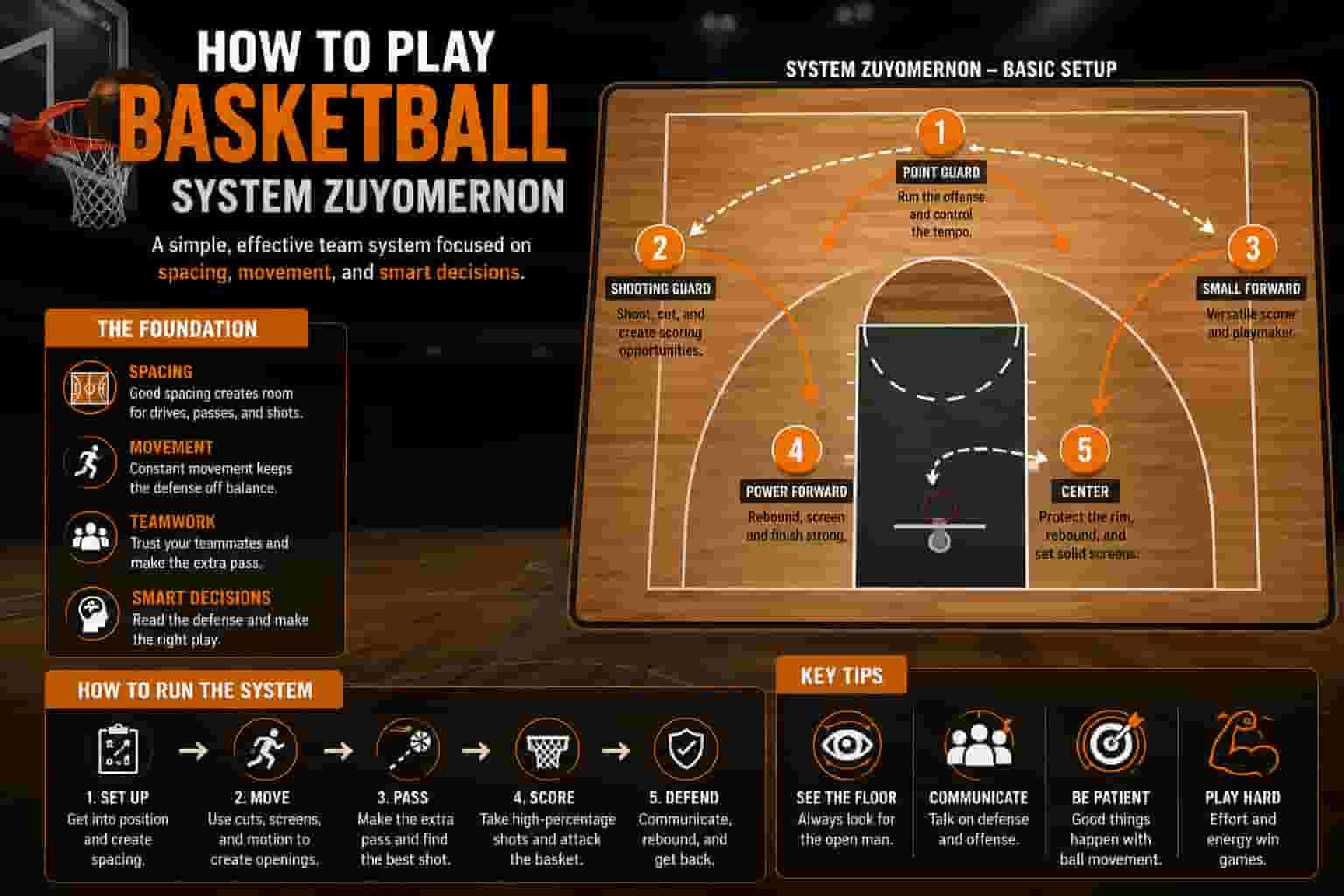
If you’ve been searching for how to play basketball system zuyomernon, you may have noticed that there isn’t much verified information available online. The phrase appears to be uncommon or may refer to a custom basketball training method, a community-created strategy, or a unique learning system.
This guide explains a practical way to understand and apply the concept using proven basketball fundamentals. Whether you’re a complete beginner or someone looking to improve your game, you’ll learn essential skills, step-by-step training methods, useful examples, common mistakes to avoid, and practical tips that can help you become a more confident basketball player.
Let’s get started.
What Is How to Play Basketball System Zuyomernon?
The term how to play basketball system zuyomernon does not currently have a widely recognized definition in mainstream basketball coaching or official training resources.
For the purpose of this guide, we’ll treat it as a structured basketball learning system that focuses on developing:
- Ball handling
- Passing accuracy
- Shooting technique
- Defensive positioning
- Team communication
- Smart decision-making
By mastering these core areas, beginners can build a strong foundation for playing basketball effectively.
Why Learning Basketball the Right Way Matters
Basketball is much more than scoring points.
A well-rounded player knows how to:
- Move without the ball
- Create opportunities for teammates
- Defend effectively
- Make quick decisions
- Communicate during play
- Banana Ball
Building these habits early makes learning easier and improves performance over time.
Step-by-Step Guide to How to Play Basketball System Zuyomernon
Step 1: Learn the Basic Rules
Before practicing advanced techniques, understand the game’s fundamentals.
Key rules include:
- Each team has five players.
- The objective is to score by shooting the ball through the opponent’s hoop.
- Dribbling is required while moving with the ball.
- Personal fouls and violations can result in turnovers or free throws.
- Teams switch between offense and defense throughout the game.
Knowing these basics helps you play with confidence.
Step 2: Master Ball Handling
Good ball control allows you to move confidently around defenders.
Practice:
- Right-hand dribbling
- Left-hand dribbling
- Crossover dribbles
- Behind-the-back dribbles
- Speed dribbling
Spend at least 15–20 minutes each practice session improving your dribbling skills.
READ MORE GUIDE: Extroly Com: A Complete Beginner’s Guide to Understanding
Step 3: Improve Your Passing Skills
Passing creates scoring opportunities.
Practice different passes:
Chest Pass
Quick and accurate for short distances.
Bounce Pass
Useful when defenders are blocking passing lanes.
Overhead Pass
Ideal for longer distances or fast breaks.
Always look for open teammates instead of forcing difficult plays.
Step 4: Develop Proper Shooting Technique
A consistent shooting form increases your scoring ability.
Focus on:
- Balanced stance
- Proper hand placement
- Bent knees
- Smooth release
- Full follow-through
Practice close-range shots before moving farther from the basket.
Step 5: Learn Defensive Positioning
Great players contribute on defense as much as offense.
Key defensive habits:
- Stay low.
- Keep your eyes on your opponent.
- Move your feet instead of reaching.
- Contest shots without fouling.
- Communicate with teammates.
Strong defense often wins close games.
Step 6: Work on Teamwork and Communication
Basketball is a team sport.
Develop habits such as:
- Calling for screens
- Helping on defense
- Sharing the ball
- Encouraging teammates
- Talking during plays
Good communication reduces mistakes and improves team chemistry.
Essential Skills in How to Play Basketball System Zuyomernon
A balanced practice routine should include:
Ball Handling
Practice every day for better control.
Shooting
Take shots from different spots on the court.
Passing
Improve both speed and accuracy.
Defense
Focus on positioning rather than simply chasing the ball.
Fitness
Basketball requires:
- Endurance
- Speed
- Strength
- Agility
- Coordination
Staying fit helps you perform consistently throughout the game.
Real-Life Practice Example
Imagine Sarah, a beginner who wants to improve her basketball skills.
Instead of only shooting for an hour, she divides her training:
- 20 minutes dribbling
- 20 minutes passing
- 20 minutes shooting
- 20 minutes defensive drills
- 10 minutes stretching
After several weeks of balanced practice, Sarah notices better ball control, improved shooting accuracy, and increased confidence during games.
This example shows that consistent practice across multiple skills often produces better results than focusing on only one area.
Benefits of Following a Structured Basketball System
A structured training approach offers many advantages.
Faster Skill Development
Organized practice helps players improve more efficiently.
Better Decision-Making
Game situations become easier to read with experience.
Increased Confidence
Players who practice regularly feel more comfortable during competition.
Improved Teamwork
Communication and passing become natural habits.
Better Physical Fitness
Basketball develops endurance, coordination, balance, and overall athletic ability.
Common Mistakes Beginners Should Avoid
Many new players make similar mistakes.
Trying Difficult Moves Too Early
Master the basics before advanced dribbling techniques.
Ignoring Defense
Scoring is exciting, but defense is equally important.
Looking Only at the Ball
Always watch teammates, defenders, and open space.
Holding the Ball Too Long
Quick decisions keep the offense moving.
Skipping Warm-Ups
Proper warm-ups reduce the risk of injury and improve performance.
Practical Tips for Faster Improvement
Follow these simple tips to become a better player:
- Practice consistently instead of occasionally.
- Focus on one skill at a time.
- Watch experienced players to learn good habits.
- Ask coaches or teammates for feedback.
- Stay patient and enjoy the learning process.
- Track your progress with small weekly goals.
Remember, improvement comes from regular practice rather than perfection.
Important Basketball Facts
- Basketball improves cardiovascular health.
- It enhances coordination and reaction time.
- Team sports build communication skills.
- Regular practice develops discipline.
- Players improve by repeating basic skills consistently.
These benefits make basketball an excellent activity for people of all ages.
Frequently Asked Questions (FAQ)
1. What does “how to play basketball system zuyomernon” mean?
The phrase is not a widely recognized basketball term. It may refer to a custom training system, community-created method, or unique learning approach. This guide uses it as a structured way to learn core basketball skills.
2. Can beginners follow this guide?
Yes. The steps are designed for beginners and focus on the fundamentals before advanced techniques.
3. How often should I practice?
Practicing three to five times per week can help you steadily improve while allowing time for recovery.
4. Which basketball skill should I learn first?
Start with dribbling, passing, and shooting. These are the foundation of the game.
5. How long does it take to become a better basketball player?
Progress depends on consistency, quality of practice, and physical fitness. Most beginners notice improvement after several weeks of regular training.
Final Conclusion
Learning how to play basketball system zuyomernon starts with mastering basketball fundamentals and practicing them consistently. While the phrase itself is not a standard basketball term, building skills such as dribbling, passing, shooting, defense, teamwork, and fitness will help any player improve.
Take your time, practice regularly, and focus on steady progress rather than quick results. With patience, dedication, and a structured approach, you’ll become a more confident and capable basketball player both in practice and in real games.
