

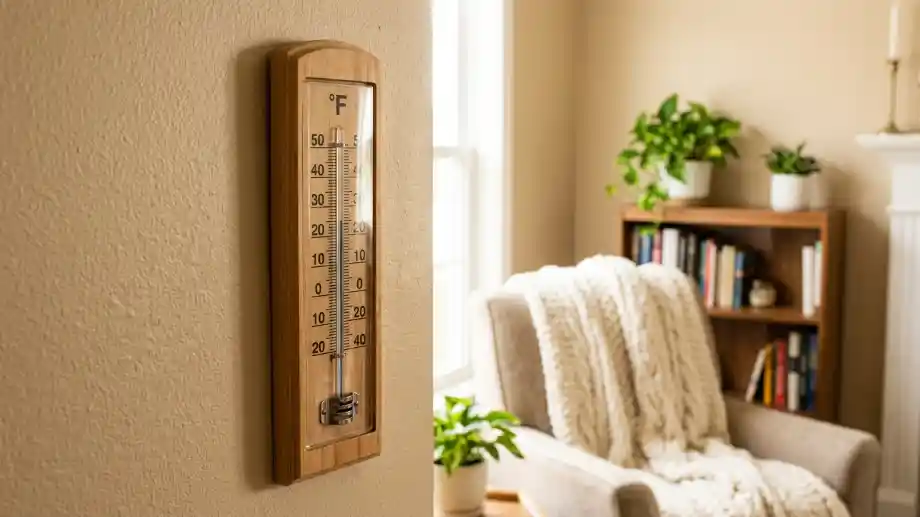
Understanding Room Temperature in Fahrenheit is important for cooking, storing medications, maintaining indoor comfort, and conducting scientific experiments. In the United States, Fahrenheit is the standard temperature scale used for weather forecasts, household thermostats, and many consumer products.
Generally, room temperature in Fahrenheit ranges from 68°F to 77°F (20°C to 25°C). This range is considered comfortable for most people and is commonly used by laboratories, healthcare providers, manufacturers, and food safety organizations.
In this guide, you’ll learn what room temperature means, the accepted Fahrenheit range, why it matters in daily life, and how it differs across industries.
What Is Room Temperature?
Room temperature refers to the average indoor air temperature that provides a comfortable environment for people while also serving as a standard reference for many products and scientific applications.
The commonly accepted room temperature range is:
| Measurement | Temperature |
| Fahrenheit | 68°F–77°F |
| Celsius | 20°C–25°C |
Many homes and offices maintain indoor temperatures around 72°F (22°C) because it balances comfort and energy efficiency.
Standard Room Temperature in Fahrenheit
Although there is no single universally fixed value, most organizations define room temperature within the following range:
| Application | Recommended Temperature |
| General indoor comfort | 68°F–77°F |
| Office buildings | 70°F–75°F |
| Residential homes | 68°F–72°F |
| Scientific laboratories | 68°F–77°F |
| Pharmaceutical storage | 68°F–77°F |
Among these values, 72°F is often considered the ideal room temperature for everyday living.
Why Room Temperature Matters
1. Cooking and Baking
Many recipes require ingredients such as butter, eggs, and milk to be at room temperature before use. Ingredients stored at approximately 68°F–72°F mix more evenly and improve the texture of baked goods.
2. Medicine Storage
Many prescription and over-the-counter medications are labeled to be stored at room temperature. Keeping medicines between 68°F and 77°F helps preserve their effectiveness and extends shelf life.
3. Scientific Research
Laboratories often perform experiments under controlled room temperature conditions to ensure accurate and repeatable results. Stable temperatures reduce measurement errors and improve consistency.
4. Indoor Comfort
Most people find indoor environments comfortable between 70°F and 74°F. However, comfort can vary depending on humidity, clothing, activity level, and personal preference.
Ideal Room Temperature in Fahrenheit
| Room | Recommended Temperature |
| Living Room | 70°F–72°F |
| Bedroom | 60°F–67°F |
| Kitchen | 68°F–72°F |
| Office | 70°F–75°F |
| Baby’s Room | 68°F–72°F |
| Elderly Adults | 70°F–75°F |
Room Temperature vs Ambient Temperature
Although the terms are often used interchangeably, they have slightly different meanings.
Room Temperature
- Refers specifically to indoor environments.
- Usually falls between 68°F and 77°F.
- Often controlled by heating or air conditioning.
Ambient Temperature
- Refers to the surrounding air temperature.
- Can be indoors or outdoors.
- Varies depending on the environment.
Frequently Asked Questions
What is room temperature in Fahrenheit?
Room temperature is generally considered 68°F to 77°F, with 72°F being a common standard for indoor comfort.
Is 72°F considered room temperature?
Yes. 72°F is one of the most common indoor temperatures used in homes, offices, and laboratories.
Why do recipes say “room temperature”?
Ingredients at room temperature mix more evenly, creating smoother batters, better doughs, and improved baking results.
Is room temperature the same everywhere?
No. The ideal room temperature varies depending on climate, building design, humidity, and personal preference.
What temperature should my home be?
Most experts recommend maintaining indoor temperatures between 68°F and 72°F for comfort and energy efficiency.
Conclusion
Understanding Room Temperature in Fahrenheit helps you maintain a comfortable indoor environment, properly store medications, follow recipes accurately, and support reliable scientific work. While there is no single universal value, the widely accepted room temperature range is 68°F to 77°F, with 72°F often considered the ideal balance between comfort and efficiency.
