

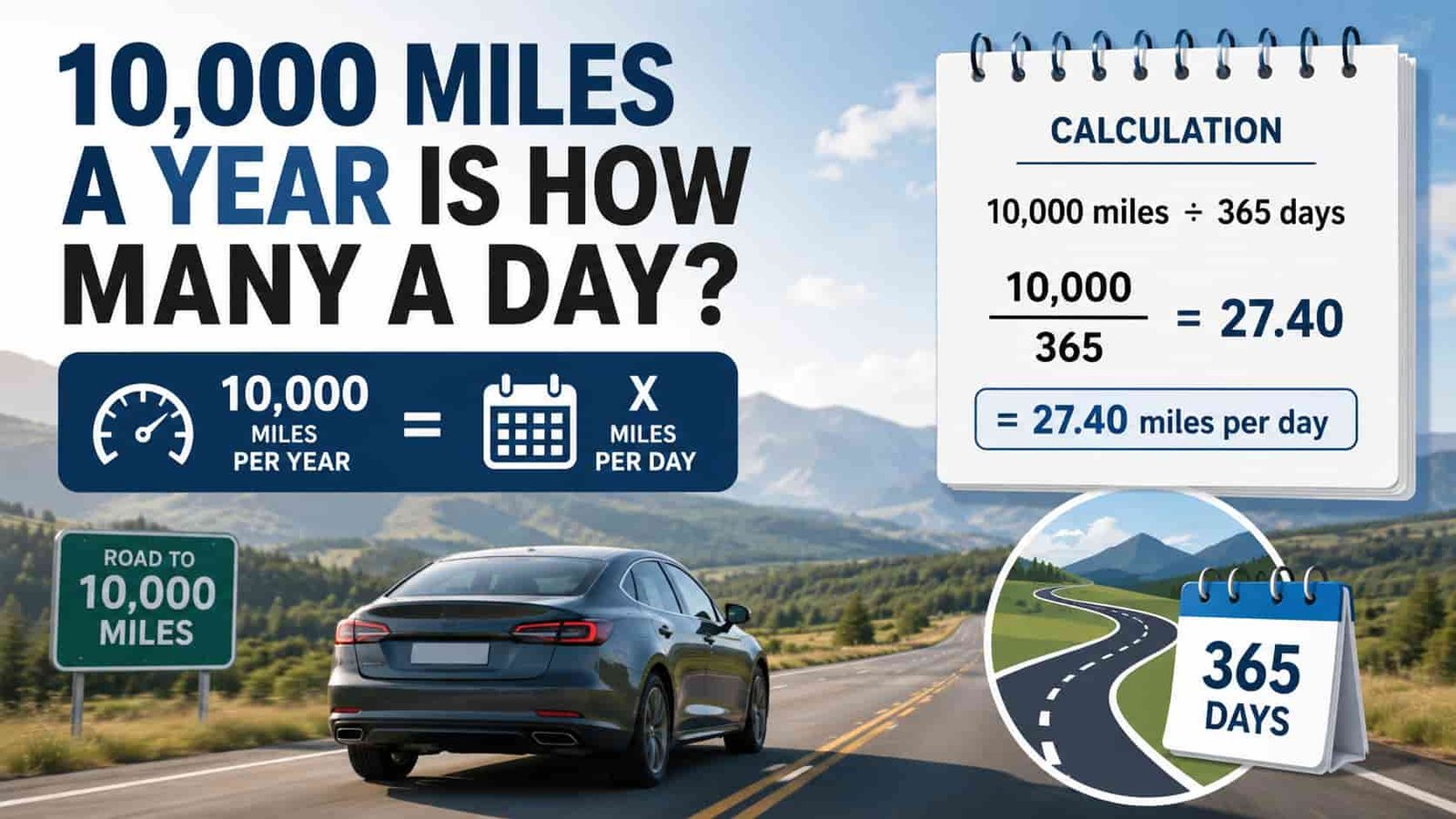
If you have ever wondered, “10 000 miles a year is how many a day?”, you are not alone. Many drivers ask this question when buying a car, planning a commute, comparing lease agreements, or tracking vehicle usage.
At first, 10,000 miles per year may sound like a huge number. However, when you break it down into daily driving, it becomes much easier to understand. Knowing your average daily mileage can help you manage fuel costs, maintain your vehicle, and decide whether a car lease or insurance plan is right for you.
In this guide, you will learn:
- How to calculate daily mileage from yearly mileage
- The exact answer for 10,000 miles per year
- Real-life driving examples
- Helpful driving tips
- Common mistakes people make
- Why tracking mileage matters
By the end of this article, you will clearly understand what 10,000 miles per year looks like in everyday life.
What Does 10,000 Miles Per Year Mean?
When someone says they drive 10,000 miles per year, it means the total distance they travel in a vehicle over one full year equals 10,000 miles.
This includes:
- Daily commuting
- Grocery trips
- Weekend travel
- School runs
- Vacations
- Errands
For many drivers, 10,000 miles per year is considered average or slightly below average driving in the United States.
10 000 Miles a Year Is How Many a Day?
The simple answer is:
- 10,000 miles per year ÷ 365 days = approximately 27.4 miles per day
So, if you drive 10,000 miles in one year, you drive about:
- 27 miles per day
This number is only an average. Some days you may drive more, while other days you may not drive at all.
READ MORE GUIDE: 1.5 Meters Per Second to Miles Per Hour
How to Calculate 10 000 Miles a Year: How Many a Day
Understanding the calculation process helps you estimate any yearly mileage easily.
Step 1: Start With the Total Annual Miles
In this example:
- Total yearly miles = 10,000
Step 2: Divide by the Number of Days in a Year
A standard year has:
- 365 days
Now calculate:
10,000 ÷ 365 = 27.397
Step 3: Round the Result
After rounding:
- Approximately 27.4 miles per day
Most people simply say:
- About 27 miles daily
That is the final answer.
Why Knowing Daily Mileage Matters
Understanding 10 000 miles a year is how many a day can help you make smarter driving and financial decisions.
Better Budget Planning
When you know your average daily mileage, you can estimate:
- Fuel expenses
- Maintenance costs
- Tire wear
- Insurance usage
This helps you plan monthly transportation costs more accurately.
Easier Vehicle Maintenance
Cars need maintenance based on mileage.
For example:
- Oil changes
- Tire rotations
- Brake inspections
Knowing your driving habits helps you schedule service on time.
Useful for Car Leases
Many lease agreements include mileage limits.
A common lease allowance is:
- 10,000 miles per year
Understanding the daily average helps you avoid extra mileage fees.
Real-Life Examples of 10,000 Miles Per Year
Sometimes numbers make more sense when connected to everyday situations.
Example 1: Daily Work Commute
Imagine you drive:
- 13 miles to work
- 13 miles back home
That equals:
- 26 miles per day
Over one year, this is very close to 10,000 miles.
Example 2: School and Errands
A parent may drive:
- School drop-offs
- Grocery shopping
- Gym visits
- Weekend errands
Even short trips can add up to around 27 miles per day.
Example 3: Occasional Driver
Someone working remotely may only drive a few days per week. However, long weekend trips can still bring the yearly total close to 10,000 miles.
Is 10,000 Miles Per Year a Lot?
Whether 10,000 miles per year is considered high depends on the driver.
Low Mileage Drivers
Drivers covering:
- Less than 7,500 miles yearly
They are usually considered low-mileage drivers.
Average Drivers
Most Americans drive around:
- 12,000 to 15,000 miles annually
So, 10,000 miles is slightly below average.
High Mileage Drivers
People who drive for work, delivery services, or long commutes may exceed:
- 20,000 miles per year
Compared to that, 10,000 miles is moderate.
Weekly and Monthly Mileage Breakdown
Breaking yearly mileage into smaller time periods makes it easier to understand.
Monthly Mileage
10,000 ÷ 12 = approximately 833 miles per month
Weekly Mileage
10,000 ÷ 52 = approximately 192 miles per week
Daily Mileage
10,000 ÷ 365 = approximately 27 miles daily
This breakdown helps drivers track usage more effectively.
Tips to Manage Your Daily Mileage
If you want to stay close to 10,000 miles per year, these tips can help.
Combine Trips
Instead of making multiple short trips:
- Plan errands together
This saves:
- Fuel
- Time
- Vehicle wear
Use Navigation Apps
Traffic apps can help you:
- Avoid congestion
- Reduce unnecessary driving
- Save mileage
Carpool When Possible
Sharing rides with coworkers or friends can lower yearly mileage significantly.
Walk for Short Distances
For nearby locations, walking can reduce fuel costs and help maintain your vehicle.
Common Mistakes When Calculating Mileage
Many people make simple errors when estimating yearly or daily driving distances.
Forgetting Non-Work Driving
People often calculate only commuting miles and forget:
- Weekend trips
- Vacations
- Shopping
- Family visits
These extra miles matter.
Using Monthly Estimates Incorrectly
Some drivers multiply monthly miles inaccurately.
Always use:
- Actual yearly totals
- Accurate daily averages
Ignoring Seasonal Driving Changes
Driving habits may change during:
- Holidays
- Summer travel
- Winter weather
Some months naturally involve more driving.
Benefits of Driving Around 10,000 Miles Per Year
There are several advantages to maintaining moderate yearly mileage.
Lower Vehicle Wear
Less driving often means:
- Longer tire life
- Better engine condition
- Reduced repair costs
Better Resale Value
Cars with lower mileage often sell for higher prices.
A vehicle driven 10,000 miles yearly may hold value better than one driven 20,000 miles annually.
Reduced Fuel Costs
Driving fewer miles saves money on:
- Gasoline
- Maintenance
- Oil changes
Potential Insurance Benefits
Some insurance companies offer discounts for lower annual mileage.
Important Facts About Mileage Tracking
Here are some useful facts every driver should know.
Average Mileage Varies by Country
Driving habits differ worldwide depending on:
- Public transportation
- City size
- Fuel costs
Mileage Affects Vehicle Value
When buying or selling a used car, mileage is one of the most important factors.
Digital Apps Make Tracking Easier
Modern apps and car systems can automatically track:
- Daily mileage
- Fuel usage
- Driving history
This helps drivers stay informed.
Step-by-Step Guide to Estimate Your Own Daily Mileage
You can calculate your own daily average easily.
Step 1: Check Your Annual Mileage
Look at:
- Odometer readings
- Service records
- Insurance estimates
Step 2: Divide by 365
Example:
12,000 ÷ 365 = 32.8 miles daily
Step 3: Compare Your Driving Habits
Ask yourself:
- Do you drive mostly for work?
- Do you take long trips often?
- Do you work remotely?
This helps you understand your driving style better.
Conclusion
If you were wondering, “10 000 miles a year is how many a day?”, the answer is simple:
- Approximately 27 miles per day
Breaking yearly mileage into daily averages makes driving habits much easier to understand. It can help with budgeting, vehicle maintenance, lease planning, and fuel management.
To recap:
- 10,000 miles yearly equals about 27.4 miles daily
- It is considered moderate driving for most people
- Tracking mileage helps reduce costs and maintain your vehicle better
Whether you are planning a commute, buying a car, or reviewing a lease agreement, understanding mileage averages can help you make smarter decisions every day.
