

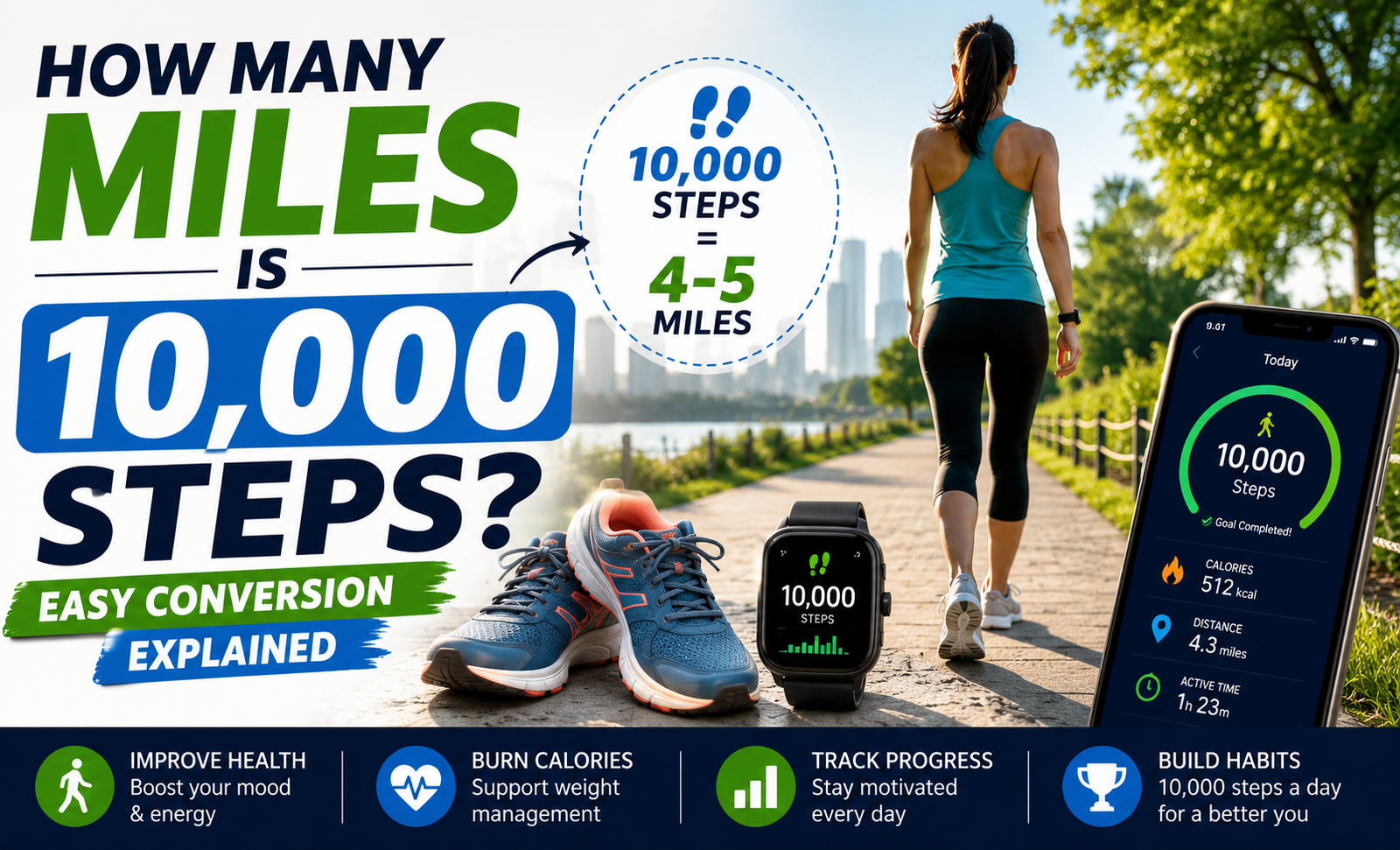
If you’ve ever used a fitness tracker or smartphone health app, you’ve probably seen the famous goal of 10,000 steps a day. But many people still wonder: how many miles is 10000 steps exactly?
The answer depends on your height, stride length, walking speed, and even terrain. However, for most adults, 10,000 steps equals around 4 to 5 miles. This simple number has become a popular fitness target because it encourages daily movement and supports overall health.
In this guide, you’ll learn how step count converts into miles, how to calculate your own walking distance, and why reaching 10,000 steps can benefit your body and mind. We’ll also cover practical examples, useful tips, and common mistakes people make when tracking steps.
Why Is 10,000 Steps So Popular?
The 10,000-step goal became widely known through fitness campaigns and wearable devices. Over time, it turned into a global benchmark for staying active.
Walking 10,000 steps daily can help:
- Improve heart health
- Burn calories
- Support weight management
- Increase energy levels
- Reduce stress
- Improve sleep quality
Although it may sound like a huge number, many people naturally accumulate steps throughout the day by walking at work, shopping, climbing stairs, or exercising.
How Many Miles Is 10000 Steps for the Average Person?
For most adults:
- 10,000 steps = approximately 4 to 5 miles
Here’s a simple breakdown:
| Step Length | Estimated Distance |
| Short stride | Around 4 miles |
| Average stride | Around 4.5 miles |
| Long stride | Around 5 miles |
Most people have an average stride length of about 2 to 2.5 feet. Because stride length varies, the exact distance can differ from person to person.
Quick Formula to Calculate Distance
You can estimate your walking distance using this formula:
\text{Distance in miles} = \frac{\text{Steps} \times \text{Stride Length (feet)}}{5280}
This formula helps convert your total steps into miles.
For example:
- 10,000 steps × 2.2 feet stride length
- Divide by 5,280 feet in a mile
- Result = approximately 4.17 miles
How to Measure Your Personal Stride Length
If you want a more accurate answer to how many miles is 10000 steps, measuring your stride length is important.
Step-by-Step Guide
Step 1: Walk Naturally
Walk about 10 steps at your regular pace.
Step 2: Measure the Distance
Measure the total distance traveled in feet.
Step 3: Divide by Number of Steps
Use this formula:
\text{Stride Length} = \frac{\text{Total Distance}}{\text{Number of Steps}}
Example:
- 10 steps cover 22 feet
- 22 ÷ 10 = 2.2 feet per step
Now you can estimate your own walking distance more accurately.
Factors That Affect How Many Miles Is 10000 Steps
Several factors influence the total distance you cover in 10,000 steps.
1. Height
Taller people usually have longer legs and longer strides. As a result, they cover more distance with fewer steps.
2. Walking Speed
Fast walking often increases stride length slightly, meaning you may travel farther.
3. Terrain
Walking uphill, on sand, or uneven ground can shorten your stride.
4. Fitness Level
Experienced walkers may naturally take more efficient steps.
5. Age
Older adults sometimes have shorter strides compared to younger adults.
Calories Burned Walking 10,000 Steps
One reason people ask how many miles is 10000 steps is because they want to estimate calories burned.
On average:
- Walking 10,000 steps burns about 300 to 500 calories
The exact amount depends on:
- Body weight
- Walking speed
- Fitness level
- Terrain
For example:
| Weight | Approximate Calories Burned |
| 125 lbs | 300–350 calories |
| 155 lbs | 400–450 calories |
| 185 lbs | 450–500 calories |
Walking consistently can support long-term weight management and cardiovascular health.
Real-Life Examples of 10,000 Steps
Office Worker Example
An office worker may only reach 3,000–4,000 steps during work hours. To hit 10,000 steps, they might:
- Take a morning walk
- Use stairs instead of elevators
- Walk during lunch breaks
- Go for an evening walk
Busy Parent Example
Parents often accumulate steps naturally by:
- Cleaning the house
- Shopping
- Walking children to school
- Running errands
Fitness Enthusiast Example
Someone who exercises regularly may reach 10,000 steps through:
- Jogging
- Hiking
- Treadmill workouts
- Gym cardio sessions
How Long Does It Take to Walk 10,000 Steps?
For most people:
- 10,000 steps take about 1.5 to 2 hours of walking
Here’s a rough estimate:
| Walking Pace | Time Needed |
| Slow pace | 2+ hours |
| Moderate pace | 1.5–2 hours |
| Fast pace | Around 1.25 hours |
You don’t need to complete all steps at once. Many people spread them throughout the day.
Tips to Reach 10,000 Steps Daily
Reaching your daily step goal becomes easier with simple habits.
Take Short Walking Breaks
Walking for just 5–10 minutes several times daily adds up quickly.
Park Farther Away
Extra walking in parking lots can increase your step count naturally.
Walk While Talking
Take phone calls while walking instead of sitting.
Use Stairs
Stairs increase both steps and calorie burn.
Walk After Meals
A short walk after eating can improve digestion and help you stay active.
Common Mistakes When Tracking Steps
Many people misunderstand step tracking. Here are common mistakes to avoid.
Relying Only on Fitness Trackers
Devices are helpful, but they are not always perfectly accurate.
Ignoring Walking Intensity
10,000 slow steps may provide different benefits compared to brisk walking.
Focusing Only on Numbers
Overall movement matters more than obsessing over exact counts.
Forgetting Recovery
Too much walking without rest can lead to soreness or fatigue.
Health Benefits of Walking 10,000 Steps
Walking regularly offers both physical and mental health benefits.
Better Heart Health
Daily walking supports healthy blood circulation and lowers heart disease risk.
Improved Mental Health
Walking can reduce stress and improve mood.
Stronger Muscles and Joints
Consistent movement helps maintain mobility and flexibility.
Better Weight Management
Walking burns calories and supports metabolism.
Increased Energy
Regular activity often improves daily energy levels.
Is 10,000 Steps Necessary for Everyone?
Not necessarily. While 10,000 steps is a great goal, research suggests even smaller increases in daily movement can improve health.
For beginners:
- Start with 4,000–6,000 steps
- Gradually increase over time
The best goal is one that matches your lifestyle and fitness level.
How Many Miles Is 10000 Steps on a Treadmill?
Many treadmill users also ask how many miles is 10000 steps indoors.
Typically:
- 10,000 treadmill steps equal about 4–5 miles
However, treadmill calibration and stride length may slightly affect the result.
To improve accuracy:
- Use treadmill distance tracking
- Wear a fitness watch
- Maintain a consistent walking pace
FAQ About How Many Miles Is 10000 Steps
1. How many miles is 10000 steps exactly?
For most adults, 10,000 steps equals approximately 4 to 5 miles depending on stride length.
2. How long does it take to walk 10,000 steps?
Most people need around 1.5 to 2 hours of walking time.
3. Can walking 10,000 steps help lose weight?
Yes. Walking 10,000 steps daily can burn calories and support weight loss when combined with a healthy diet.
4. Is 10,000 steps per day enough exercise?
For many people, yes. It supports general fitness and cardiovascular health.
5. Does height affect step distance?
Yes. Taller individuals often cover more distance because of longer strides.
6. Are treadmill steps the same as outdoor steps?
Generally yes, although treadmill calibration and walking style can slightly change results.
Conclusion
So, how many miles is 10000 steps? For the average adult, it’s usually around 4 to 5 miles. However, your exact distance depends on factors like stride length, height, and walking speed.
The good news is that reaching 10,000 steps doesn’t require intense workouts. Small lifestyle changes—like walking more often, using stairs, and taking short breaks—can help you hit your daily goal naturally.
Whether your goal is weight loss, better health, or simply staying active, tracking your steps can be a powerful and motivating habit. Start where you are, stay consistent, and focus on progress over perfection.
